Boys accidentally resolve a real dispute during practice negotiation exercise
Windsor, Berkshire
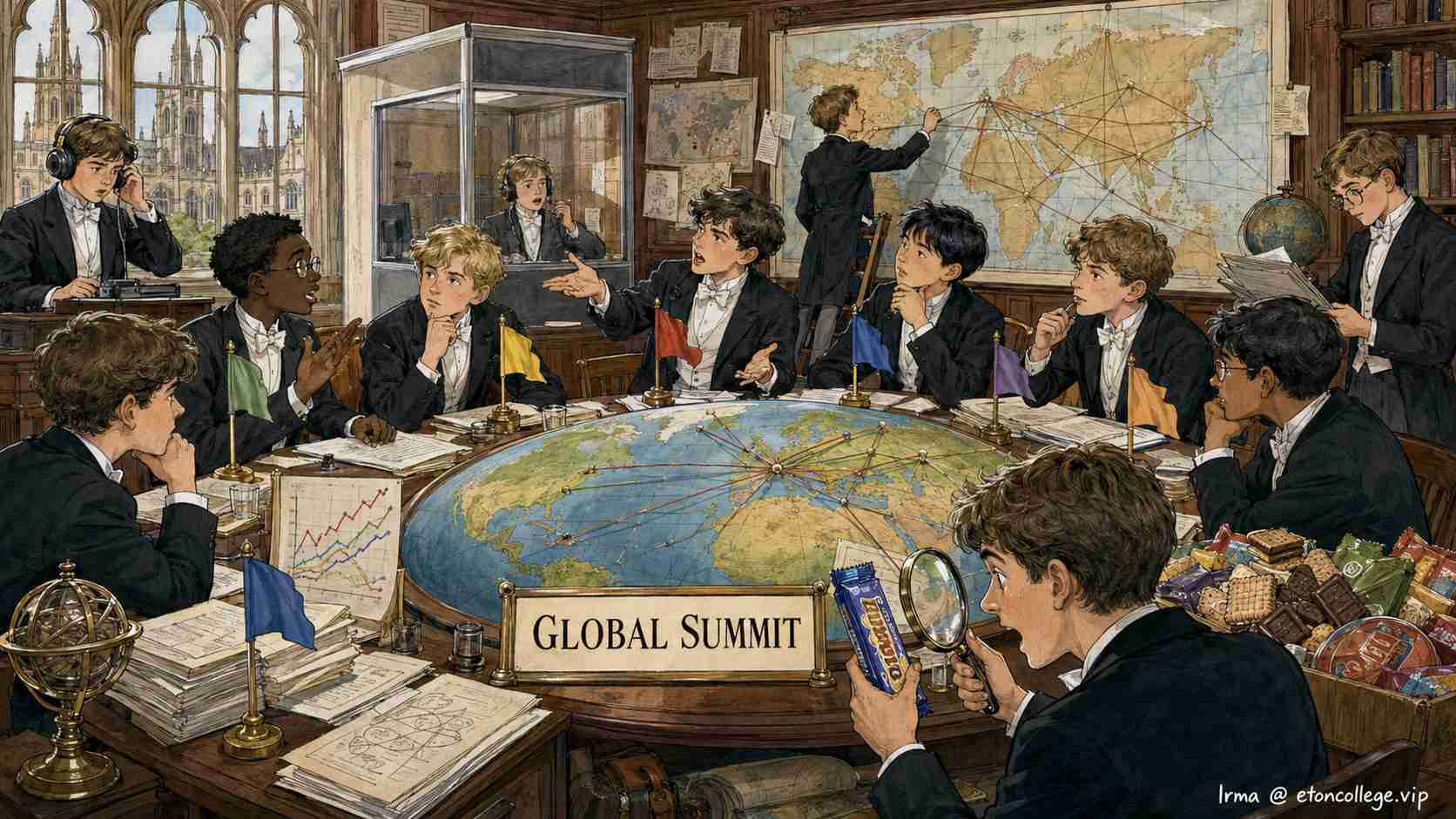
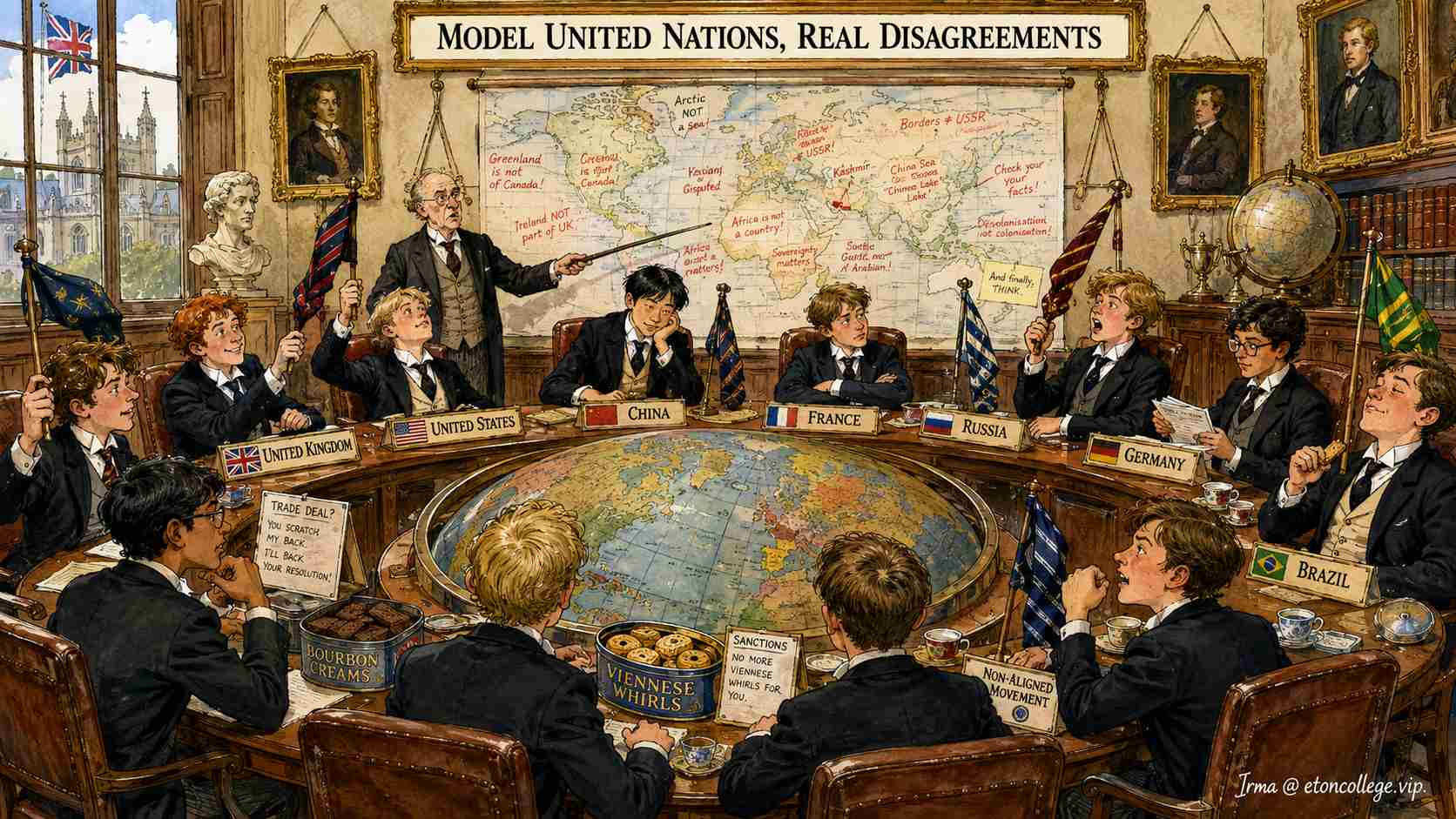
The Eton College Model United Nations society’s termly negotiation exercise took an unexpected turn last week when a session designed purely as practice diplomacy appeared to accidentally produce a genuinely workable compromise on a real ongoing trade dispute, a development society president Percival Adeyemi-Cross called "honestly more than we were expecting from a Tuesday evening."
"We were just meant to be practising negotiation technique," he said. "Nobody told the delegation representing the smaller economy that they weren’t allowed to actually win. And then, somehow, everyone else agreed with them."
How It Happened
Politics master Mr. Edward Carrow-Sinclair, who supervises the sessions, said the breakthrough emerged when a Fifth Former representing a smaller nation proposed a compromise so straightforward that "several boys representing larger economies simply couldn’t think of a reason to object, which I understand is rarer in real diplomacy than one might hope." He added that he has since, only half-jokingly, considered forwarding the minutes to "anyone who might actually find them useful."
The proposal itself, involving a modest tariff adjustment and a phased implementation period, was described by one observing economics teacher as "more coherent than several actual policy papers I’ve read this year," a compliment Adeyemi-Cross called "flattering, though possibly also a comment on the policy papers."
The Royal Segment, As Usual
No Britain and the World session would be complete without the customary royal family discussion, and this term’s proved no exception, with boys debating the now-familiar question of "modernisation versus tradition" for a solid twenty minutes before, as always, reaching no firm conclusion. History master Mr. Reginald Ashby-Coombes said he has begun timing the debate purely out of curiosity, and confirmed it has never once concluded in under fifteen minutes, nor ever produced a genuinely new argument.
Council Tax Working Group Reports Back
The Council Tax Working Group, now in its second term of existence, presented a further update, this time claiming "meaningful progress" toward understanding local government finance, though the group’s own chair admitted the presentation still contained "at least one diagram that even I’m not entirely sure is accurate." Carrow-Sinclair praised the group’s persistence, calling it "the single most dogged pursuit of genuinely useful knowledge I’ve seen from any society in this school."
Reactions From Faculty
Faculty observers were broadly impressed by the trade negotiation outcome, though several cautioned against reading too much into a single successful exercise. Ms. Priya Ashcombe-Reid noted that "these boys have also, on separate occasions, spent forty minutes debating tuck shop pricing without resolution, so I’d say the sample size here is encouraging but small."
Carrow-Sinclair agreed, though he admitted the session had left him "cautiously optimistic" about the cohort’s future, adding that "if nothing else, it proves they’re capable of agreeing on something, provided nobody important is actually watching."
What Comes Next
The society has already scheduled a follow-up session for next term, this time addressing what Adeyemi-Cross calls "a considerably thornier issue," though he declined to specify which real-world dispute the boys would be unknowingly attempting to solve next, noting only that "it’s probably best if they don’t know the stakes going in. That seemed to be half the reason it worked this time."
Old Boys Take an Interest
News of the accidental breakthrough has reportedly reached a handful of Old Etonian alumni now working in international relations, several of whom contacted the society directly, half in amusement and half, Adeyemi-Cross suspects, "in genuine professional curiosity." One alumnus, now a junior diplomat, offered to review the minutes personally, a gesture Carrow-Sinclair welcomed while cautioning the boys "not to let it go to their heads, given the sample size remains, generously, one."
The society has since received an informal invitation to observe a genuine trade negotiation session at a nearby institution, an opportunity Adeyemi-Cross called "extremely exciting, and also slightly terrifying, given our one success so far was arguably an accident."
A Word of Caution
Not everyone is swept up in the enthusiasm. Ashby-Coombes, ever the historian, reminded the society that "a single successful negotiation exercise does not a foreign policy make," and suggested the boys "enjoy this moment, but perhaps not build an entire personal brand around it before the next session, which may well end in the usual forty minutes of inconclusive debate." Adeyemi-Cross conceded the point, though he admitted he had already updated his own biography for the podcast to include the phrase "accidental diplomat."
Whatever happens next term, Carrow-Sinclair says he intends to keep the minutes from this session on file permanently, "partly for the archive, and partly because I suspect it may be some time before this particular cohort produces anything quite so useful again by accident."
Adeyemi-Cross, for his part, says the society’s real ambition now is consistency rather than repeat luck, adding that "the goal isn’t to solve world trade every Tuesday, it’s just nice to know we technically could, once, under the right conditions and with nobody paying too much attention."
For now, the framed minutes hang in the Old Library, next to the Debating Society’s own laminated motto, a pairing Ashcombe-Reid calls "the two most unlikely artefacts this school has produced in a single term, and somehow both entirely on brand."
Disclaimer: This report was compiled under the editorial standards of The London Prat. Related reading: Weird News Today The Onion UK Australian Humour
SOURCE: https://prat.uk/