Britain and the World society’s first genuine civic action hits procedural snag
Windsor, Berkshire
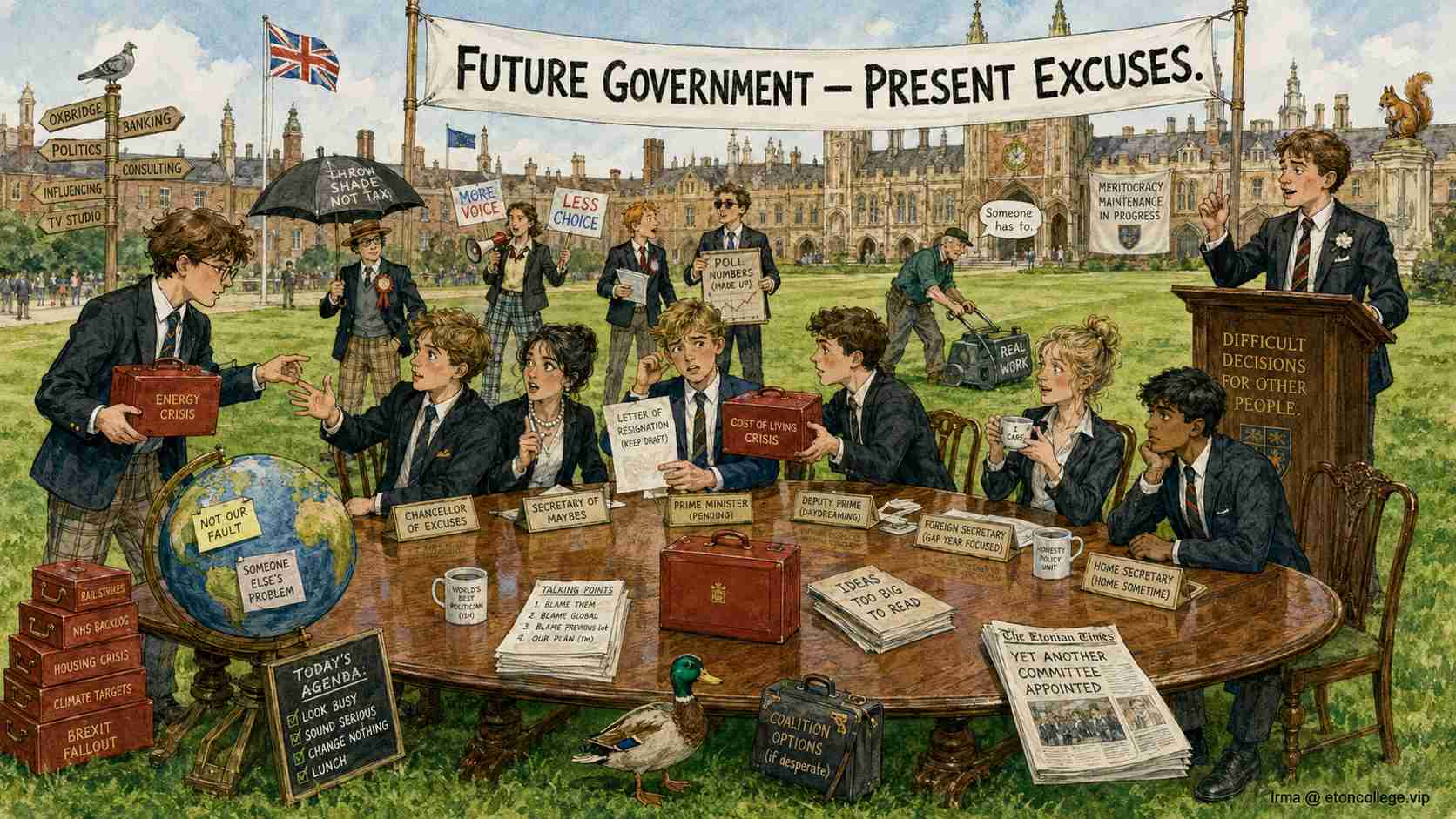
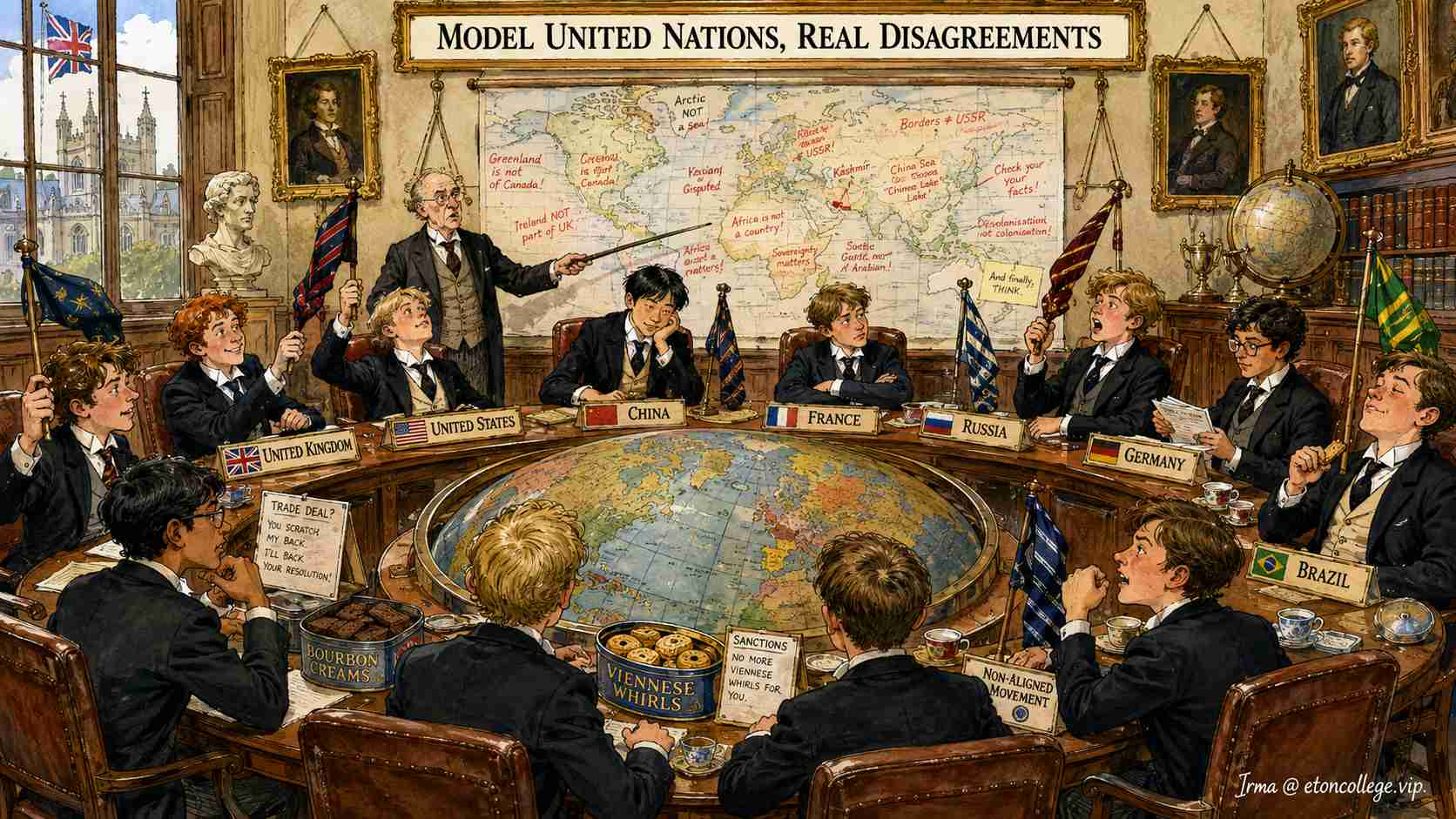
The Eton College Britain and the World society has drafted its first genuine letter to a sitting Member of Parliament, addressing concerns about local transport links, only to discover that no one in the drafting committee was entirely certain of the correct formal address for a constituency MP, a gap society president Percival Adeyemi-Cross called "a genuinely humbling realisation for a group that spent forty minutes debating trade policy last term without hesitation."
"We know exactly how to solve a theoretical tariff dispute," Adeyemi-Cross admitted. "We did not know whether to write ‘Dear Sir’ or ‘Dear Mr.’ or something else entirely. It took us longer to resolve the salutation than the actual policy content."
The Letter’s Contents
The letter itself, once the address question was finally resolved with help from a passing English master, raises concerns about bus service reliability affecting local families, a genuinely practical issue politics master Mr. Edward Carrow-Sinclair called "refreshingly grounded compared to some of the society’s more ambitious theoretical exercises."
"It’s easy to solve the deficit on paper," he said. "It’s considerably harder, apparently, to work out how to correctly address a letter. I find this data point genuinely instructive about where this generation’s strengths currently lie."
Royal Family Commentary, Briefly
As is customary for any Britain and the World session, a portion of the meeting was set aside for the usual discussion of the monarchy’s role in modern Britain, a debate history master Mr. Reginald Ashby-Coombes says remains "so reliably unchanging that I could set my watch by which argument gets made first." This term’s session broke slightly from tradition when a Fourth Former, new to the society, offered what Ashby-Coombes called "a genuinely fresh angle," involving comparisons to constitutional monarchies elsewhere in Europe, a contribution that earned him immediate, if slightly bemused, respect from the assembled Sixth Formers.
Council Tax Working Group’s Continued Crusade
The Council Tax Working Group, now something of a fixture at these sessions, used the meeting to announce it had finally produced what its chair calls "a genuinely comprehensive, if slightly overlong, explainer document" on local government finance, a milestone Carrow-Sinclair greeted with what he admits was "disproportionate enthusiasm for a document about council funding formulas."
The Letter Gets Sent
With the address question finally settled, the letter was posted, formally, from the school’s own post room, an act several boys treated with what Adeyemi-Cross called "an unexpected amount of ceremony for what is, ultimately, a stamped envelope." The society now awaits a response, which Carrow-Sinclair cautions "may take some time, given that MPs, unlike this society, generally have rather a lot else on."
A Broader Lesson
Faculty advisor Ms. Priya Ashcombe-Reid said the episode, however minor, offered a useful corrective to the society’s usual mode of operation. "They’re extremely comfortable debating grand, abstract policy," she said. "Actually engaging with a real institution, with real procedures and real etiquette, turned out to be a genuinely different skill. I’d call that progress, even if it took an embarrassingly long time to work out how to start a letter."
What Happens If a Reply Arrives
Adeyemi-Cross says the society has already begun, only half-jokingly, drafting a response to a reply that has not yet arrived, a habit Carrow-Sinclair called "entirely on brand for this group," and one he does not expect them to break any time soon.
A Note on Precedent
Carrow-Sinclair says he intends to keep the entire episode, address confusion included, as a teaching example for future sessions, calling it "a useful reminder that civic engagement involves considerably more procedural detail than any of our theoretical exercises tend to acknowledge." He has already begun drafting a short internal guide on correct forms of address for various public officials, a document he hopes will "spare the next cohort at least one of the mistakes this group made."
Adeyemi-Cross, informed of the plan, welcomed it, though he noted with some pride that "future generations will at least know we were the ones who had to learn it the hard way, which I choose to think of as a form of institutional service."
The letter, in the meantime, remains in the post, its fate unknown, its address now correctly formatted, and its drafting process, boys agree, considerably more educational than anyone had originally anticipated.
Should a reply eventually arrive, Adeyemi-Cross confirms the society already has a filing system prepared for it, "somewhere between the Council Tax Working Group’s paperwork and the podcast archive, which feels like the right neighbourhood for it."
Carrow-Sinclair, closing the term’s session, said he considered the whole episode "a small but genuine reminder that the machinery of actual civic life, however mundane its details, rewards patience more than cleverness, a lesson this particular society does not always find easy to absorb."
Still, he conceded, watching a room full of Sixth Formers debate a stamp and a salutation with the same intensity they once brought to balancing a national budget was, in its own modest way, "exactly the kind of unglamorous civic education this school ought to be providing more of."
Disclaimer: This report was compiled under the editorial standards of The London Prat. Related reading: Weird News Today Breaking Funny News Funny News Latest
SOURCE: https://prat.uk/